
Maha Shivaratri ka Parv
When the Shiva (God) element leaves the body, the body is referred to as Shava (dead body). The Lord of the universe permeates it in its entirety. He is the life force in each living thing. Maha Shivaratri is a time to remind ourselves of the Shiva aspect latent in each of us.
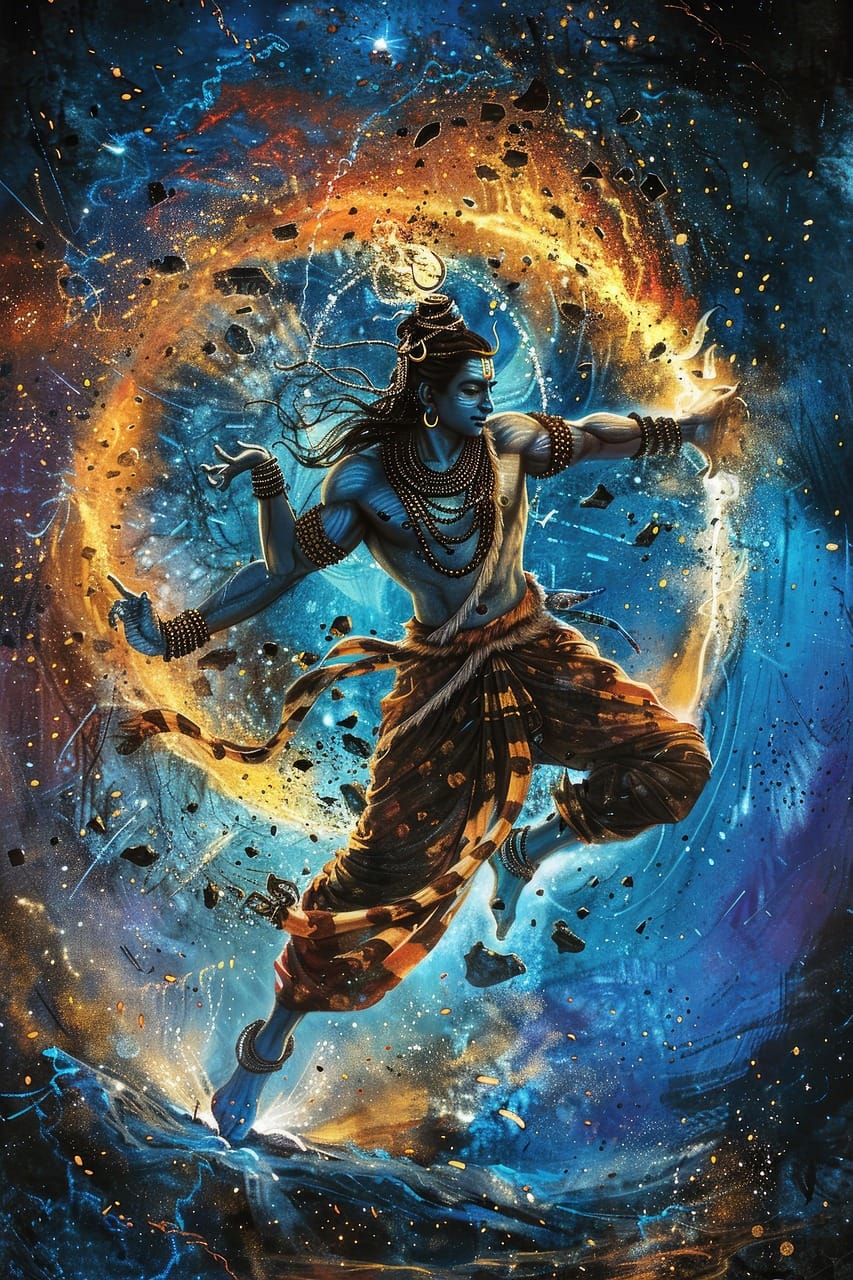
Maha Shivaratri will be on 15th February, 2026. It is an auspicious time in the Lunar cycle when a sincere seeker can turn his/her mind inwards. By meditating on God or singing His glory, the Bhakta can experience bliss. Sri Sathya Sai Baba encouraged all devotees to understand the spiritual significance of all religious festivals and to sincerely engage in their own personal spiritual sadhna.
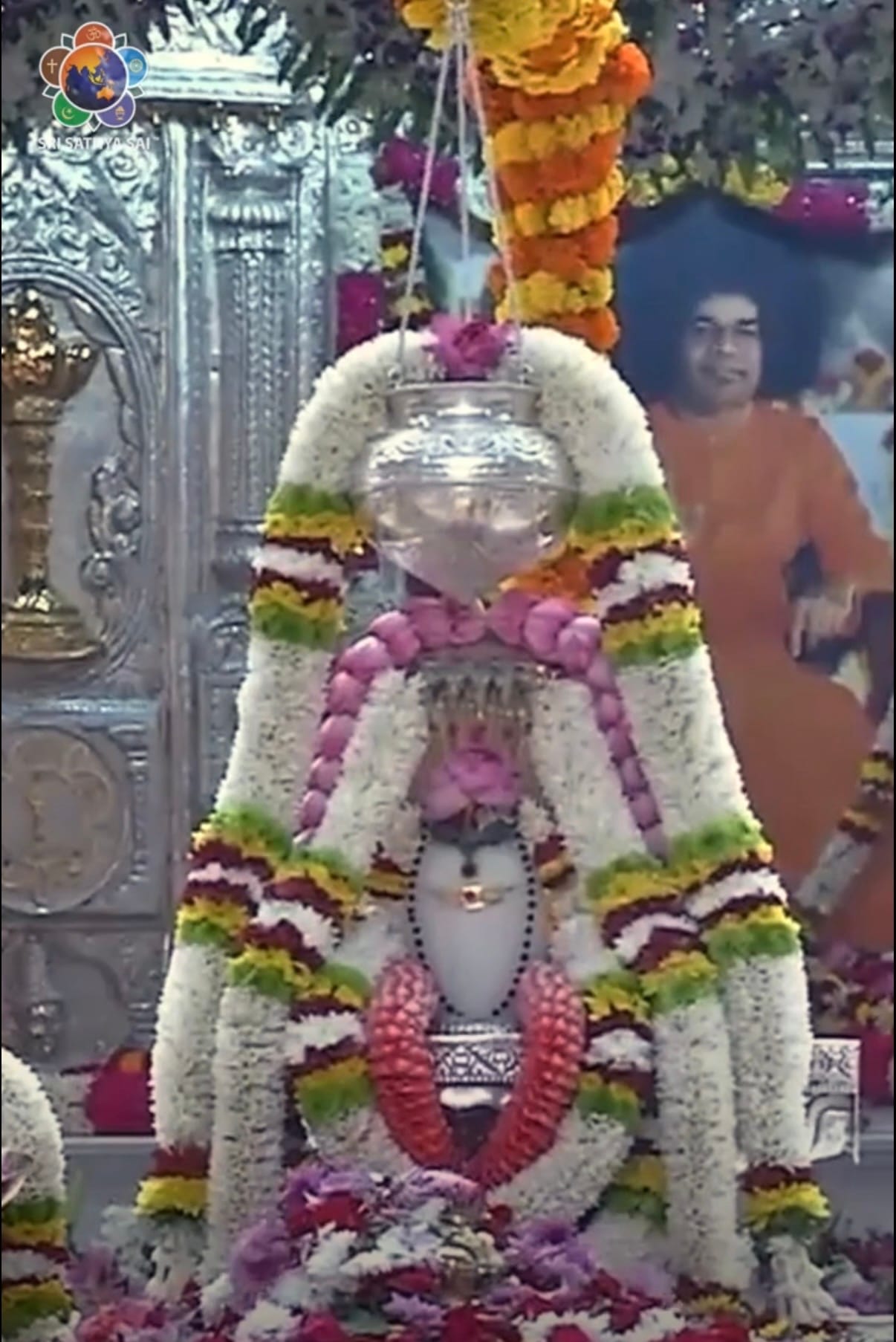
The 14th day of the Krishna Paksh (waning moon) in each month, is Shivaratri. On Shivaratri day, the moon is shaped like a crescent. It’s barely visible, like the one shown on the matted locks of Shiva. The Shivaratri that occurs in the month of Phalgun (Feb-March), before the Vasant Ritu (spring), is called Maha Shivaratri.
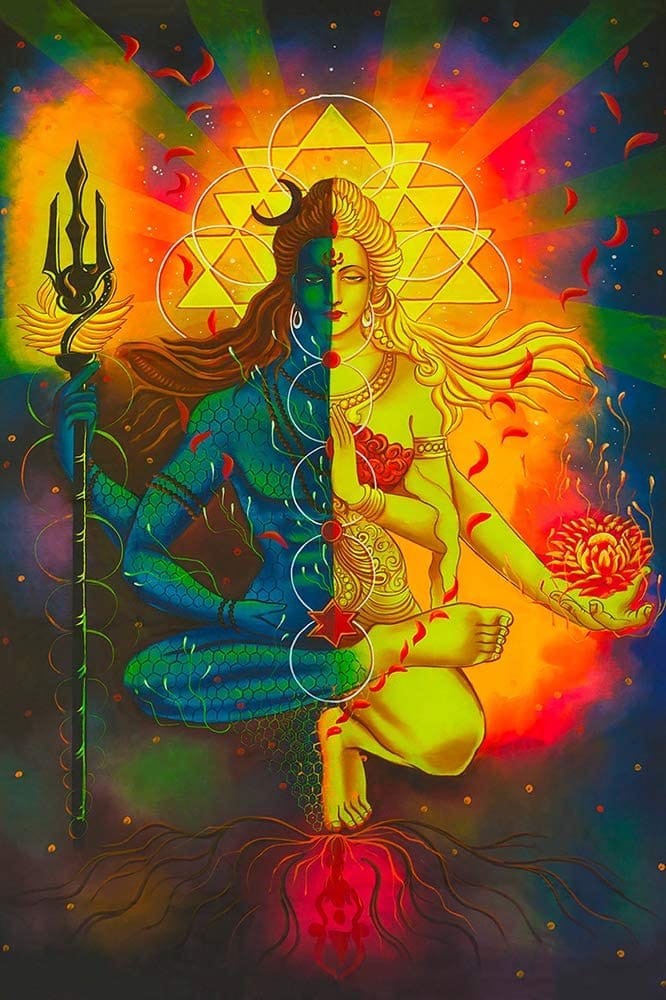
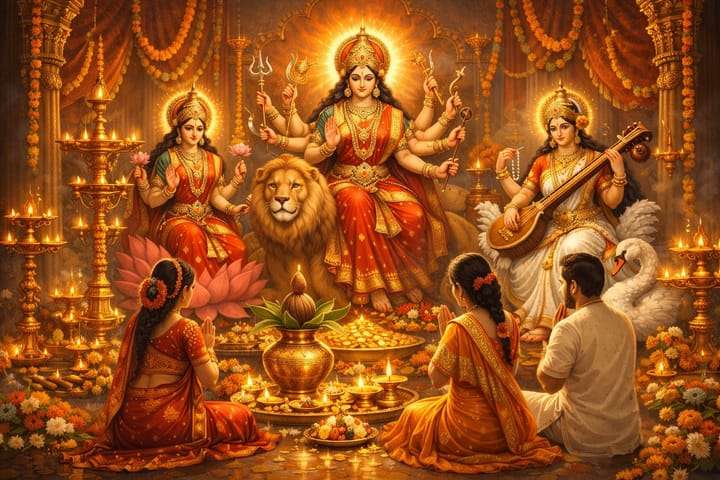
Shiva is Adipurush. Parvati is Adishakti. After Sati immolated herself in the fire of the yajna, she was reborn as Parvati. Maha Shivaratri celebrates the night when Shiva married Parvati after she performed many years of penance. Shiva is Purusha. Parvati is Prakriti. Maha Shivatratri commemorates the union of Purush and Prakriti. Shiva and Parvati are the ideal couple who complement each other in every way and are worshipped together as Ardhanarishwara.
Just as Omkar is the sound of God, the Sivalingam is the visible form of the invisible God. The Sivalingam is oval, reflecting the shape of the universe. The platform supporting the oval Sivalingam symbolises Parvati. The Sivalingam we worship signifies the union of Prakriti and Purush/Parameswara. Maha Shivaratri is a very auspicious time to meditate to connect with Shiva.
Shiva drank the Halahal (poison) that emerged from the churning of the ocean during Samudra Manthan. After he gulped the poison, Parvati pressed his throat to contain the poison there, so the poison would not enter his stomach. This turned his throat blue, and Shiva became Neelkanth - the blue-throated one. He is also called Halahal-dhar, meaning the one who consumed the venomous poison, to save mankind. It is said that Shiva’s body emanated so much heat after consuming poison that he was given bhang or cannabis to drink and to cool down. That’s why bhang leaves are offered to Shiva on Shivaratri. Bhang is a coolant and a mind-relaxant when used as a medicine in small quantities. Its current portrayal is misleading.
We also offer Shiva, a thorny fruit called Dhatura, Bhang (cannabis) leaves and the flowers of the Aak plant. Offering the trifoliate Bilva leaves symbolises surrendering the three aspects of our personalities: physical, mental and intellectual. All these offerings are practically of zero value, but Shiva is pleased by them. Even the poorest of the poor can afford to offer them.
After accepting these humble offerings, the Lord, in His benevolence, gives us his blessings. Shiva is called Bholenath or Bhole Baba because he is so easy to please. He is the Lord of the simpletons. Nothing fancy or expensive is required for worshipping Him. The Shiv-mandir is usually located outside the main Mandir, because it is believed that Shiva stays awake all night, lest any bhakta come to the Mandir. He is available, even when the Mandir is closed. Such is His simplicity and accessibility!
Shiva and Parvati are worshipped together as Ardh-Nari-Ishwar, i.e. half-man and half-woman. They are the most inspiring couple known to humankind.
The family of Shiva is known as Adi Kutumbakam. Each member has distinct ideologies, tastes and habits. While Parvati dresses in fine silks and jewels, Shiva dresses in a lion's skin, his body smeared with Vibhuti (ash). Ash symbolises the understanding that everything in the material world is impermanent and will eventually be reduced to ash. Parvati rides a lion. Shiva rides on Nandi, the bull. Their elder son, Kartikeya, is thin and rides a peacock. Their younger son, Ganesha, is fat, has an elephant head and rides a mouse. Their daughter, Ashok Sundari, was begotten from a wish-fulfilling tree and is worshipped for her beauty and grace.
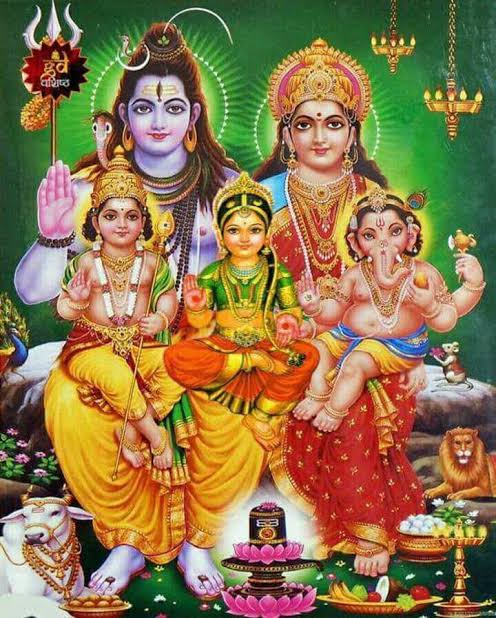
Shiva’s lion’s skin is symbolic of being in control of His passion as well as of creation. The bull and lion are arch enemies. The peacock, mouse and snakes are rivals, but with Shiva as the head of the family, everyone lives in harmony. This symbolises that family members may have different personalities and preferences, but they can still live in harmony. This is truly ‘Unity in Diversity’. It’s a great example for the world to emulate, for peace in the home.
Shiva carries a Trishul, symbolic of the three gunas, i.e. satva, rajas and tamo gunas. It may also be seen as the three Nadis, i.e. the Ida, Pingala and Sushumna Nadis. Ganga in Shiva’s matted hair shows control over the elements. The snakes wrapped around Shiva’s body denote control over the ego and all vices. The crescent moon on His forehead signifies a cool and calm mind. His third eye denotes his inner wisdom and his power of destruction at will.
Shiva or Purush is the invisible, intangible form of divinity. Prakriti, on the other hand, is the visible form of divinity. Prakriti refers to the gross matter in nature, like mountains, valleys, rivers, trees, plants, etc. The union of gross matter and the life aspect results in creation. That is why when the Shiva (God) element, or the Atma, leaves the body, the body is referred to as Shava (dead body). The Lord of the universe permeates it in its entirety. Yet he remains invisible. He is the life force in each living thing. Yet we fail to recognise Him. Maha Shivaratri is a time to remind ourselves of the Shiva aspect latent in each of us.

Sri Sathya Sai Baba says, “The Atma is purusha (Brahman), and the body is Prakriti (feminine principle). The unity of Purusha and Prakriti is human life. So, every human being is Ardhanarishwara (androgynous). Shiva-tattvam (the Principle of Shiva) teaches the unity of Prakriti and Purusha. This is the true meaning of Shivaratri.”
In the contemporary world, the learning from the Ardhnarishwar form, is the union of thought, word and deed in a couple. After many years of marriage, there comes a time when you understand each other like the back of your hand. In the early years together, every couple has differences. But as we get on in years, our sharp edges get smoothed. This is beneficial for both. It is also in the best interest of our progeny. Perhaps the best thing a couple can gift their children is a stable home, one in which the children can grow and bask in a stable environment created by a stable relationship between their parents. If a couple is at loggerheads, the home is like a battlefield and the children are insecure.
All of us want a stable life, peace in the home and harmony around. We must learn to live within our circumstances, even if they are adverse. The story of Shiva and Parvati portrays many trials and tribulations. It is a testament to how a couple can stand by each other through thick and thin. Our festivals remind us to emulate the values exemplified by our deities. Let’s learn from the best!
Dear Friend, may I request you to share the article further if you like it? Please subscribe to my blog if you haven't already. It would be a great encouragement for me, and the subscription is free. Thank you 😊
This has been published Daily Guardian 07.02.2026 https://epaper.thedailyguardian.com/2026/02/06/e-paper-today-delhi-07-february-2026/
 sanjana

Comments ()