
Radiate Light this Deepawali
The life story of Bhagwan Rama is talked about and remembered even today. Like they say, “Kuch to baat hogi un mein, ki baat baat mein unki baat hoti hai!”
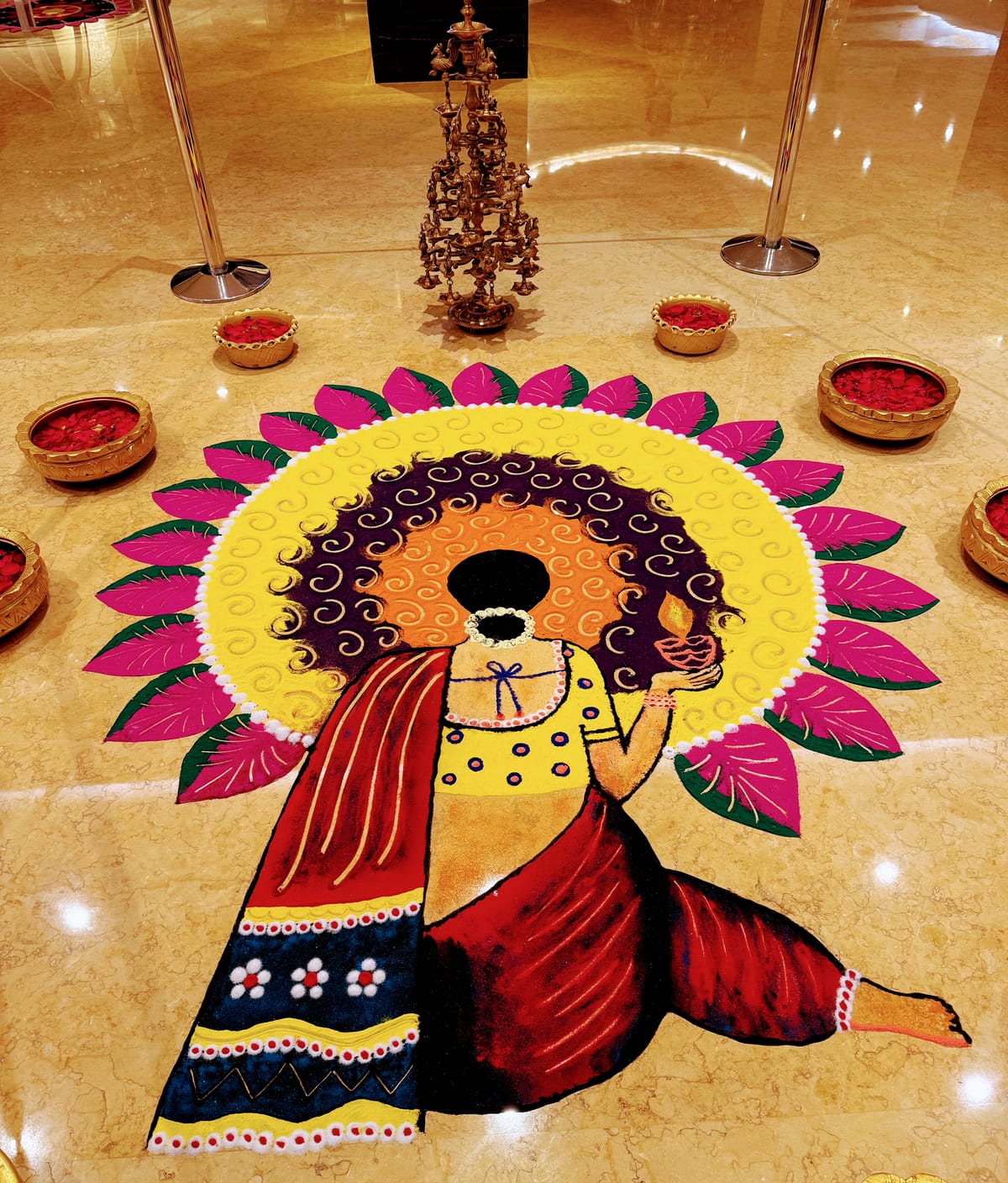
Bharat is the land of festivals. Our calendar is dotted with celebrations all through the year.
Deepawali literally means, a row of lights. Deepawali is perhaps the most awaited, favourite festival of children. They get to eat goodies, meet friends and family, decorate the house with rangolis, diyas, candles and lights, dress up in traditional Indian clothes, enjoy the Deep-mala and above all … get holidays from school! What fun!
I sometimes think of the greatness of Bhagwan Rama, the impact of His life story … He was born in the Treta yuga; after that came the Dvapara Yug and now it seems the Kaliyuga is coming to an end, but the life story of Bhagwan Rama is talked about and remembered even today. Like they say, “Kuch to baat hogi un mein, ki baat baat mein unki baat hoti hai!”
Even in present times, Ramlila is enacted all over the country, in every little village too! My mother used to tell us that Goddess Lakshmi visits our homes on the night before Diwali but she comes only to those homes that are neat and clean; spic and span. So she would ask us to clean up every nook and cranny of the house before Diwali. I now understand that it was her way of getting us to clean our cupboards, toys, etc. In the process of cleaning, we would discard things that were no longer usable and even give away stuff that we had outgrown. The lofts would get cleaned and all moisture, termites, roaches etc. would be swept out. I still do Diwali cleaning, the only difference is that now I am on the other side of the fence and I give the same bait to my children and grandchildren! I start quite a few days in advance. Every cupboard, be it full of clothes, linen, crockery, books etc. everything is taken out, cleaned, dusted and put back.
The Deepawali festival spans over five days. The festivities begin with Dhanteras. On this day Lord Dhanwantri is believed to have emerged with a kalash from the Samudra Manthan. Most people buy metal on Dhanteras. They may buy gold, silver, copper or clay utensils as per affordability. Ornaments and vehicles too are a favourite buy on Dhanteras. The entire economy of the country is pepped up, so even the smallest trader benefits from the festival.
Next comes Narak Chaturdashi. Lord Krishna and Satyabhama together, killed the demon Narakasura on this day. Krishna freed, sixteen thousand women who were the princesses of kingdoms conquered by Narakasura over the years, and had been held captive by him. The princesses asked Krishna to marry them. Krishna married them to save their honour and gave them a place of respect in the society.
Deepawali falls on Amavasya, the no-moon night. Lord Rama, Sitaji and Lakshmanji had returned to Ayodhya after fourteen years of exile, on this day. Since it was a dark moonless night, people lit up the path to Ayodhya with oil lamps, to welcome their beloved Rama. To express joy, they distributed sweets, sang, danced and celebrated! We also worship Lord Ganesha and pray for auspiciousness and Goddess Lakshmi the harbinger of wealth and prosperity, on Deepawali night.
The day after Deepawali is Govardhan Puja and Vishwakarma Day. It commemorates the day when it had rained heavily in Gokul and Lord Krishna saved the cowherds, milkmaids, cattle etc. by lifting the Govardhan Parvat on His little finger and asking all to stand under it. Vishwakarma is also worshipped on this day as the divine architect. Craftsmen worship their tools on this day. For many, it is a day to clear up the clutter and/or rest after the festivities of Diwali.
The last/fifth day of the festival, is Bhai Dooj. It is believed that Lord Yama visited his sister Yamuna on this day. Brothers take gifts to their sister’s houses, as a tradition in many communities.
In a personal interview, Sri Sathya Sai Baba told my children that both Rama and Ravana were highly educated and knowledgeable personalities. Both could speak 38 languages. Rama used his knowledge with wisdom and benevolence, for Lok-kalyan. Ravana misused his knowledge. He was greedy and egoistic. Baba said that it is great to have knowledge. What matters is, how we use it. Ravana used his knowledge for all the wrong things. Rama on the other hand was Maryada Purushottam. That is why we should emulate Him!
Rama was perfection personified. He was the ideal son, who abided by the wishes of Kaikeyi, to uphold the honour of his father.
Rama was an ideal brother. Seeing Bharata approaching their dwelling in the forest, Lakshmana thought Bharat had come to wage war with them. But Rama believed that Bharata was a righteous man. There was no animosity in the mind of Rama.
Rama was an ideal husband. In an era when most kings had several wives, he promised Sitaji that she would be his only wife. He kept His promise and did not marry another woman.
Rama was an ideal king. His regime is still remembered as ‘Ram Rajya’; the time when everything was just. Everyone was prosperous.
Rama was the ideal enemy too! When Vibhishana came to seek refuge in Rama, He said that he would accept any Sharanagati, although everyone in his camp was against the decision. Even after Ravana was killed, Rama respectfully returned his body to his wife Mandodari, with due respect.
Diwali is a reminder to learn from the character of Rama. Rather, it is a time to learn from the character of everyone in the Ramayana. The values of goodness, family, brotherhood, kinship, maternal love, duty of a husband and that of a wife … and many more, are elucidated in this great epic. Perhaps that it why it has been enacted countless times in skits, plays, ballets, movies etc. It is a thriller of its own genre. There are learnings all the way!
So this time when you wish someone, “Happy Deepawali!”, do pause to look into the intrinsic meaning of the greeting and the festival. There is much more to Deepawali than sweets, shopping, holidays, gifting, card parties, clothes, etc.
Deepawali is a reminder that goodness is the greatest thing to emulate. As you clean your home, do work on cleansing your persona and remove traces of anger, jealousy, greed, ill-will, etc.
In keeping with the tradition, light some diyas, dress in traditional clothes, share some sweets and most importantly, share love! Do spare some goodies for the lesser fortunate too! Lighting diyas, is a reminder to light up our hearts with devotion, and love. If our Hridya-Mandir is cleansed and illumined, the Lord shall surely reside therein. It is said that just as a devotee yearns for God, God too looks out for the true Bhakta.
And while lighting a Deep-mala for Deepawali, do light a lamp in your heart. Wipe out all negativity and emerge illumined, to radiate light and love. Let Diwali be felt and celebrated inside out. If you can radiate light and love, Diwali shall be truly happy and memorable!
Published in the Daily Guardian 18.10.2025 https://epaper.thedailyguardian.com/2025/10/17/chandigarh-18-october-2025/
Dear Reader, if you like this article, do subscribe to my blog. It's a free subscription. This is my small endeavour to connect the ancient to the modern in the contemporary world. God bless!
Comments ()