
The Nuances of Social Etiquette
Children who waste food at home and are not counselled for it waste food all their lives. Those who leave their toys and books strewn around, play loud music, leave the toilet dirty at home, unmindful of the disturbance caused to others, do the same outside.
Our habits and reactions to anything depend largely on our upbringing. The boundaries of correctness and morality, too, vary depending upon how our minds are wired. For some, using abusive language is part of their dialect, for others, being well-spoken is a form of art.
I was privy to an unpleasant verbal exchange at a traffic signal. A man had been zipping at high speed, shuffling between lanes, regardless of the traffic being disrupted. He stopped at a traffic signal due to congestion. Another man who had been watching him for some distance rolled down his window glass, saying, “Yeh sadak tere baap ki hai? Apni lane mein reh …” Pat came the fiery reply, “Mere baap ki to nahin hai. Tere dahej mein aayi hai kya?” I wonder why this culture of rudeness, road-hogging, playing loud music, littering and being unmindful of others’ safety and rights is so rampant. Sadly, it is not advisable to argue with anyone, because cases of murders and fights in road rage are commonplace.
Little things should be taught to children while they are still young. Children who steal stationery and snacks from their peers usually end up doing the same on a larger scale. Children who waste food at home and are not counselled for it waste food all their lives. Those who leave their toys and books strewn around, play loud music, leave the toilet dirty at home, unmindful of the disturbance caused to others, do the same outside. Children who do not push their dining chairs back after a meal may not know how to respect others’ space. Those who are not taught to speak politely at home and school would be rude to others on the street. Responsibility is doing the right thing even when no one is looking. Being truthful means telling the truth and owning up to mistakes, even when there is no chance of getting caught. Doing the right thing simply because it’s good to do it, is the mindset we need to imbibe and teach our offspring.
Children should be taught the basic values of honesty, respect, punctuality, empathy, etc., not only at school but also at home. Learning is a lifelong process. The culture of India is about respecting not only humans but also animals, trees, plants, mountains, etc. It’s our duty to find time to teach our children and grandchildren the little things in life because it’s the little things that go on to make big things. Most importantly, we have to set the right example, because children close their ears to preaching but open their eyes to practice.
The Bharatiya way of greeting socially is by joining both palms at the centre of the chest. This posture is called Anjali Mudra or Pranam-Asana. In this respectful posture, we say, Namaskar.
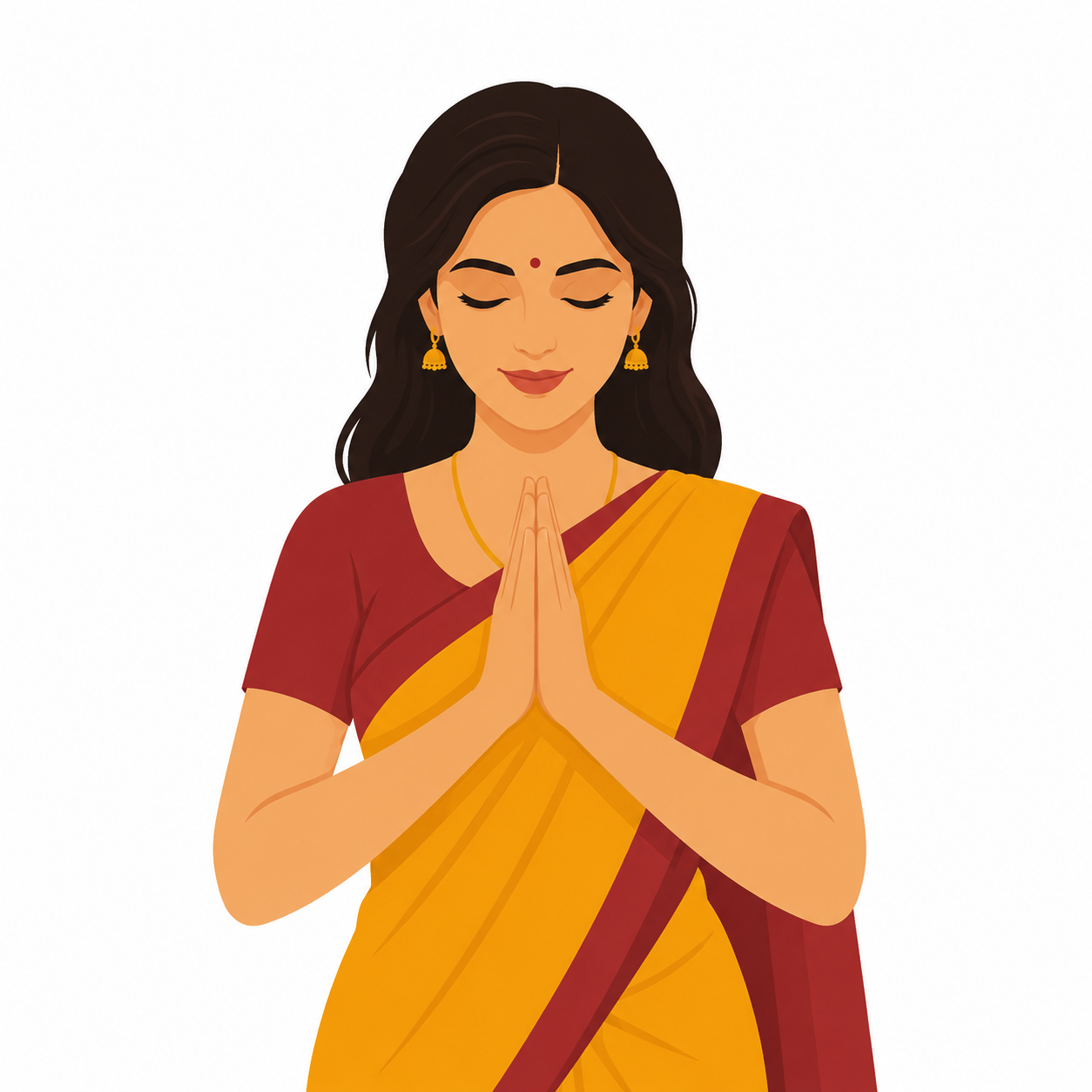
Bending while saying Namaskar is a gesture that conveys respect. The word Namaskar can be broken up into Namah+Sakaar. This means I bow to the Divinity immanent in you. The salutation ‘Namaskar’ is used in place of good morning, good afternoon, good night, Hi, bye, see you soon, etc. It’s a versatile form of greeting.
As India has diverse languages and cultures, the word Namaskar has many avatars like Namaskaramulu (Telugu), Namaskar Galu (Kannada), Namaskaram (Malayalam), Nomoshkar (Bengali), Sat-Sri-Akal (Punjabi), Vanakkam (Tamil), Khammaghani sa (Rajasthan) ...
In the urbanites, especially, the practice of saying Namaskar is fast dying, especially in the modern strata of society. Our generation, who have already lived the better part of our lives, have greeted our elders with respect, folded hands, and even touched their feet, while saying Namaskar. Some of our children's generation do greet their elders in such a way, but this tradition seems to be ‘endangered’.
The forms of greeting of the Western world- Hi! Hello! Are here to stay … While these are nice too, my heart wants to see our culture remain alive. Strangely, the modern youth have learnt to say, Bonjour Mademoiselle! Guten Morgen! Ni hao! Time for us to make sure our children keep our traditions alive …
Traditions, cuisines and dialects change as we travel through India. They change every hundred miles or so. Let me share an example of extreme diversity in showing anger. It is said that the people of Lucknow speak most sweetly. On the contrary, Punjabis are rough and loud. If a Punjabi in a road-fight is angry and is contemplating taking off his slipper to whack someone, he would say, “Chittar laane main tere …” But if at all a nawab of Lucknow is told to whack someone with his slipper, his anger would be expressed as, “Humaari jooti, aapka maatha choomne ko betaab hai …” Well! It all boils down to upbringing and culture!
Many years ago, we had a well-mannered, aggressive Sikh driver. On an extremely windy day, I was sitting in the car’s rear seat, waiting at the Government Press traffic lights on the Madhya Marg. A rustic-looking turbaned man on a motorbike overtook our car. As he slid between the rows of cars, he suddenly turned his head to the left and spat out a horrendous amount of phlegm. The wind carried it, and the gooey stuff landed squarely on the windscreen of our car, right in the face of our driver! It was an unsightly, splattering mess! And our ‘no nonsense’ driver’s blood, boiled!
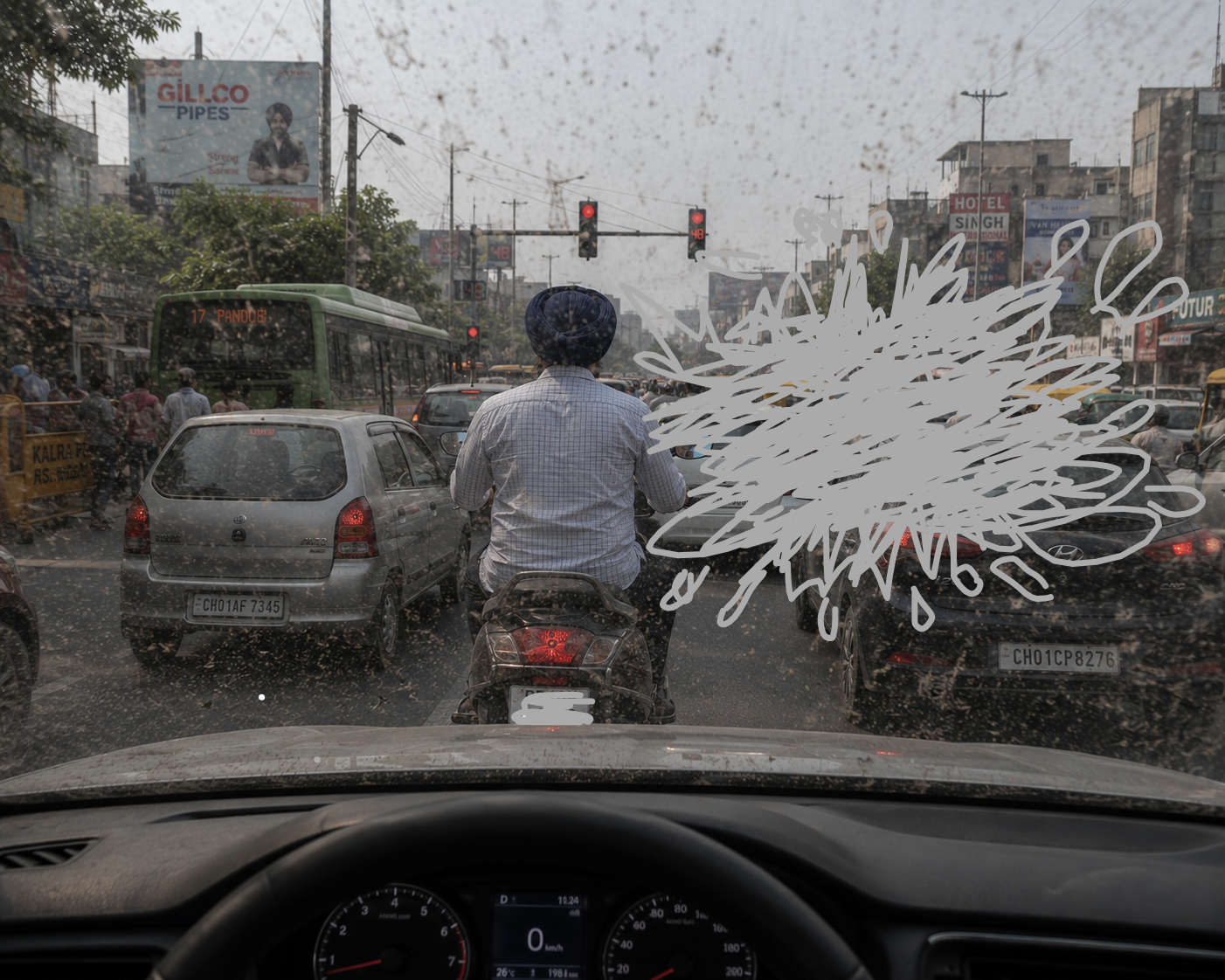
He threw open the car door and ran to catch hold of the man who had halted just a few metres ahead of us, close to the traffic signal. He caught him by the collar, gave him a whack across his face and yelled, “Eh ki kitaa hai? Tera peo saaf karega ehh nu?” The bewildered man knew not what he had done wrong. In chaste Punjabi, he told him that he was a disgrace to the community and that he had no right to wear the turban. He literally dragged him to the car and told him to clean the mess. He roared, “Chall saaf kar ehh nu!” The bewildered fellow pleaded that he had nothing to clean it with.
I watched dumbstruck, everyone around us was honking because the traffic light had turned green; we were holding up the traffic. I was terribly embarrassed and hoped no one could see me. Finally, our driver handed a cloth to the ‘offender’ and made him wipe the windscreen before letting him off. Through the drive home, I stayed silent. I didn’t know whether I should rebuke him for behaving as he did or applaud him for teaching the other fellow a lesson that he would never forget.
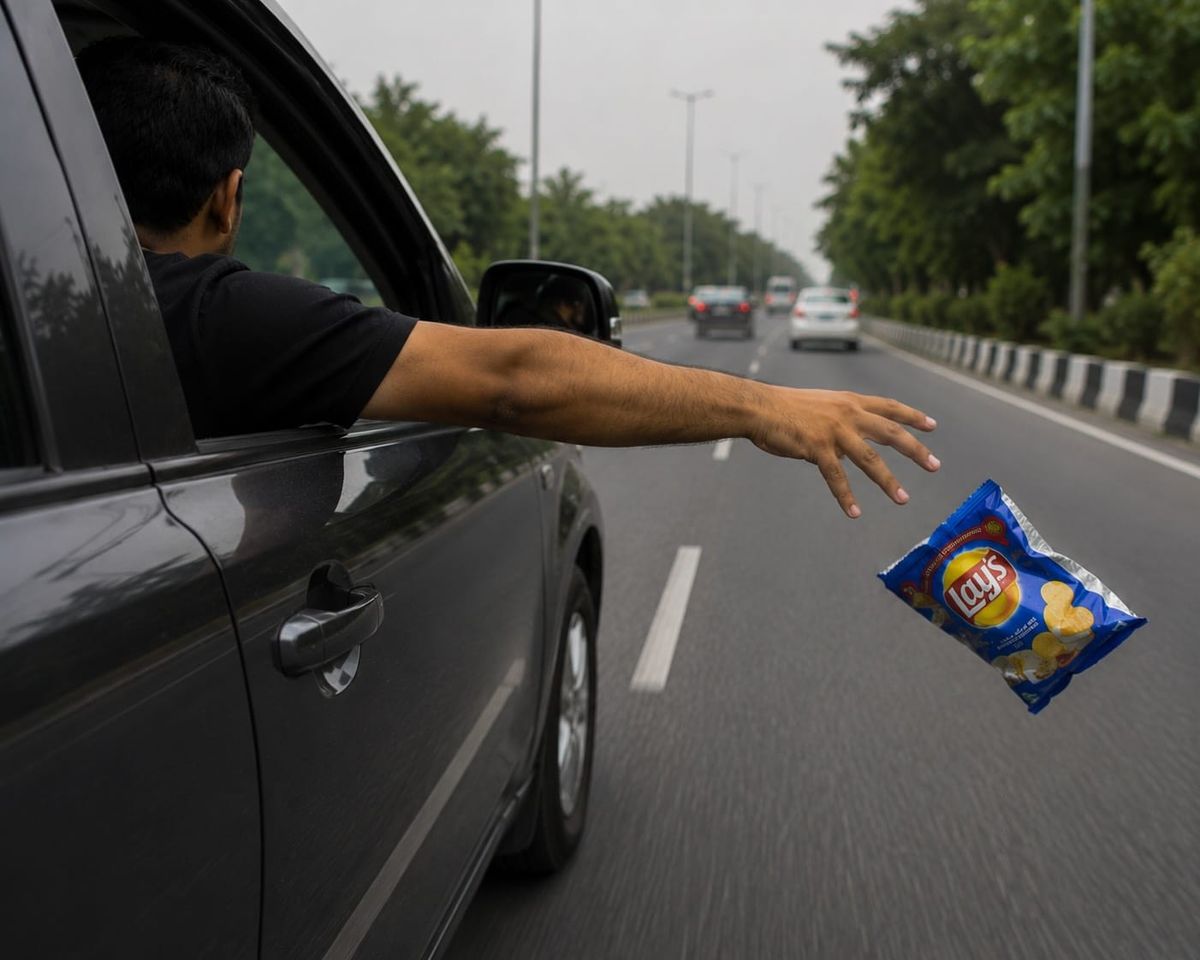
Much is lacking in social etiquette in our country. The very people who calmly toss wrappers of chips and chocolates out of the car window are the ones who fall in line when abroad, where there are heavy fines for littering. It seems people wear seat belts, follow traffic rules, etc., only when they’re being watched.
A few months back, I visited an old friend of my father. Uncle is 85 years young, and in excellent health. I needed to use the washroom. He showed me to the washroom, switched on the light and lowered the toilet seat for me! Never before had I seen anyone do that for a lady. I was speechless. What a gentleman! And at age 85, he was swift enough to do it, before I had the chance to blink!
They say, ‘Manners Maketh Man’. Yes! Good manners speak volumes about our upbringing and persona. Much needs to be taught in childhood for better social behaviour and etiquette.
Just like the slice of an apple is a sample of the entire apple, each person is a sample of the society he lives in. Each one of us needs to better ourselves and those we can influence, to improve our habits and manners. Let’s do our bit.
[Dear Reader, if you like this piece, do share it further. It would help me to increase my reach. Please subscribe to my blog. It's a free subscription. You shall receive an email whenever I post something on the blog. Thank you.]
Published in the Daily Guardian on 09.05.2026 https://epaper.thedailyguardian.com/2026/05/08/e-paper-today-delhi-09-may-2026/
Comments ()